

All Hands on Deck: State Actors and the Ratification of the UN “High Seas Treaty”
Katya Tavitian
The UN High Seas Treaty entering into force makes history in extra-jurisdictional ocean governance. Despite this achievement, there are concerns with how effective it truly is, given its heavy reliance on international cooperation, domestic enforcement, and the delays in ratification by major maritime states.
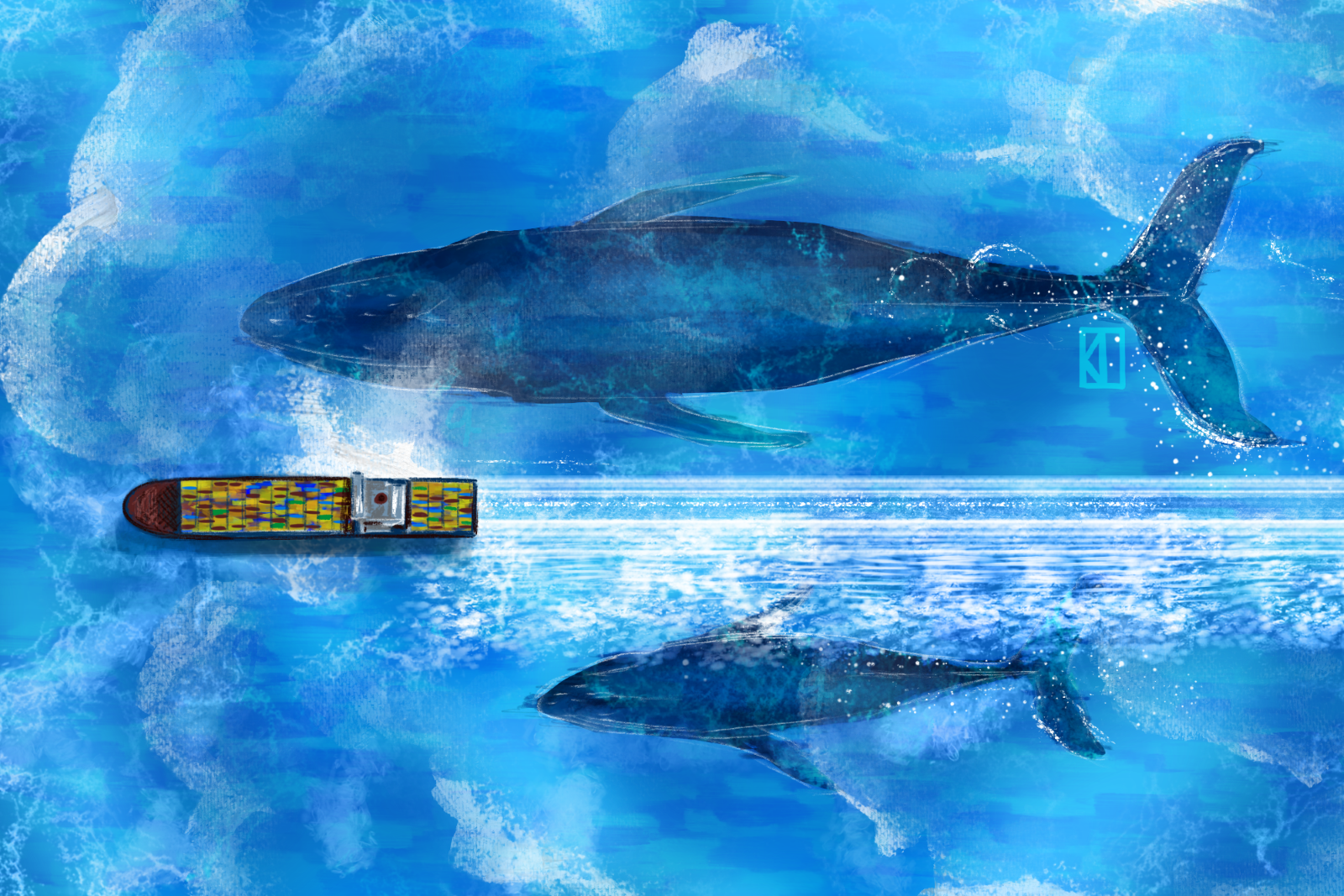
On January 17th, 2026, the United Nations’ (UN) High Seas Treaty (formally the Agreement under the United Nations Convention on the Law of the Sea on the Conservation and Sustainable Use of Marine Biological Diversity of Areas beyond National Jurisdiction (BBNJAgreement)) entered into force after clearing its 60-state ratification threshold, marking a significant development in international ocean governance. [1] Regarded as a “historic achievement” and a landmark UN treaty, it is the first legally binding set of rules on sustainably managing biodiversity in waters beyond national jurisdictions, protecting nearly two-thirds of the world’s oceans. [2]
HISTORY OF THE TREATY
On June 19th, 2023, after about two decades of negotiations, [3] the BBNJ Agreement was adopted by the Intergovernmental Conference on Marine Biodiversity of Areas Beyond National Jurisdiction, becoming the third implementing agreement to the United Nations Convention on the Law of the Sea (UNCLOS). [4] Upon this adoption, it rapidly received signatures from many states, signalling their intent to be bound and to engage in “good faith,” refraining from acts that would defeat the agreement’s purpose in the process of its ratification. [5] On September 20th, 2025, Morocco became the 60th state to ratify the treaty, triggering its entry into force 120 days later, [6] and transforming it into international, enforceable law rather than merely international norms or moral pressures to set standards.
WHAT DOES THE TREATY DO?
The BBNJ Agreement is a crucial step towards regulation of the high seas and achieving broader biodiversity conservation and sustainable development goals. The general objective of the agreement is:
“to ensure the conservation and sustainable use of marine biological diversity of areas beyond national jurisdiction, for the present and in the long term, through effective implementation of the relevant provisions of the Convention and further international cooperation and coordination.” [7]
This is accomplished by focusing on four highlighted issues: [8]
Marine genetic resources; including the fair and equitable sharing of benefits;
Measures such as area-based management tools, including marine protected areas (MPAs);
Environmental impact assessments (EIAs); and
Capacity-building and the transfer of marine technology
Given that the high seas house around 10 million species, [9] the establishment of marine protected areas is essential to biodiversity conservation. This unified approach is novel in ocean governance. Historically, regulation of the high seas has been fragmented, weak and unenforceable. [10] The BBNJ Agreement promotes cooperation between all ocean actors (from states to fishing, shipping and mining industries) [11] and ensures equal participation in shaping its rules for fairer outcomes in the sharing of high seas benefits. [12] Globally, it is a huge step towards the Kunming-Montreal Global Biodiversity Framework’s (GBD) 30x30 goal (to protect 30% of the global ocean by 2030). [13] Though the framework provides international targets, [14] they are merely voluntary; ratification of the BBNJ agreement provides a legally enforceable mechanism for these voluntary targets to actualize, backing them with more force.
WORKING TOGETHER?
The BBNJ Agreement is evidently innovative for ocean governance and promising in achieving global conservation goals, but it is not without its weaknesses. It has noble objectives of unifying ocean governance by introducing MPAs and EIAs and providing a framework for equitable sharing of Marine Genetic Resources. [15] However, it relies on States to domestically implement and enforce laws rather than having a central authority do so. [16] State resource access and political will variations could yield uneven implementation, which is problematic when the treaty goals are centered around cooperation.
MAJOR STATE RATIFICATION DELAYS AND THEIR EFFECTS
Though it received enough ratifications to enter into force, it is important to note that some major maritime states, like Canada and the United States, who have signed the treaty, have yet to ratify it. [17] In the event of delayed ratification by a signatory state, it is most likely that the delays come from lengthy domestic legal processes. However, in Canada’s case, as a “champion of the treaty” who signed it in March 2024, [18] it is odd that their ratification is taking this long. As the country with the longest coastline in the world, the public is urging the government to ratify because their absence in treaty processes will greatly impact conservation efforts. [19]
The prioritization of sovereign state interests involving maritime industries could be another reason for delayed ratification. [20] Not only does this go against the objective of the treaty, but also the larger GBD framework. Although States are not legally bound until ratification, the signing of the BBNJ Agreement requires acting in good faith to avoid undermining its goals. Prioritizing individual economic interests and exploitation of the high seas signals unwillingness to cooperate and conserve at a time when ocean biodiversity cannot afford fragmented governance. [21] This, compounded with their Senate’s divided politics, [22] seems to be the reason for the United States’ delays. They have historically ignored ratifying treaties that impose
international environmental obligations and limit their sovereignty with their rejection of UNCLOS. [23] As one of the top five ocean-related goods exporters, [24] the United States are a major ocean actor, and without ratification, their activities on the high seas are not legally regulated by the treaty, leaving holes in governance and making it less effective.
CONCLUSION
The entry into force of the High Seas Treaty is a momentous occasion for international environmental law and an achievement in regulating parts of the ocean once thought impossible to manage. However, its loose enforcement mechanisms and incomplete ratification by major ocean actors pose obstacles to its effectiveness. While clearing the ratification threshold is a significant first step, realizing the treaty’s full potential will be contingent on whether states can commit to unified, international efforts in its implementation and enforcement.
Katya is a 1L student in the Faculty of Law at McGill University. She has a Bachelor of Fine Arts in Film Animation from Concordia University with a minor in Sustainability Studies. Her interests include the human relationship to nature, the rights of non-human entities, and international environmental governance and justice. She hopes to combine law and the arts to advocate for biodiversity conservation and inspire stewardship. She would like to thank the MJSDL team, especially her senior editor, Ariella Ruby, for her guidance and title suggestion.
[1] Vibhu Mishra, “UN ‘high seas’ treaty clears ratification threshold, to enter into force in January” (20 September 2025), online: <https://news.un.org/en/story/2025/09/1165901>.
[2] Ibid.
[3] Ibid.
[4] United Nations, “Agreement on Marine Biological Diversity of Areas beyond National Jurisdiction” , online: < https://www.un.org/bbnjagreement/en>.
[5] United Nations, Fact Sheet #5: Understanding International Law, 2010 Treaty Event: Towards Universal Participation and Implementation (New York: United Nations, 2010).
[6] United Nations, supra note 4.
[7] Agreement under the United Nations Convention on the Law of the Sea on the conservation and sustainable use of marine biological diversity of areas beyond national jurisdiction, UNGA, 5th Sess, UN Doc A/CONF.232/2023/4, art 2 [BBNJ Agreement].
[8] United Nations, supra note 4.
[9] The Nature Conservancy, “A New Era for Ocean Protection” (17 January 2026), online: < https://www.nature.org/en-us/what-we-do/our-insights/perspectives/high-seas-treaty-ratification/>.
[10] Ibid.
[11] WWF, “WWF: Historic UN High Seas Treaty is a turning point for ocean protection and restoration” (19 September 2025), online: <https://wwf.panda.org/wwf_news/?14715966/WWF-Historic-UN-High-Seas-Treaty-is-a-turning-point-for-ocean-protection-and-restoration>.
[12] The Nature Conservancy, supra note 9.
[13] WWF, supra note 11.
[14] Convention on Biological Diversity, “Kunming-Montreal Global Biodiversity Framework” (19 December 2022), online: <https://www.unep.org/resources/kunming-montreal-global-biodiversity-framework>.
[15] Petros Krypotos, Beyond Borders: Assessing the High Seas Treaty's Impact on Global Marine Biodiversity (Post Graduate Diploma Dissertation, University of Piraeus, 2025) [unpublished] at 77—78.
[16] Ibid at 78.
[17] United Nations Treaty Collection, “Agreement under the United Nations Convention on the Law of the Sea on the Conservation and Sustainable Use of Marine Biological Diversity of Areas beyond National Jurisdiction”, online: <https://treaties.un.org/Pages/ViewDetails.aspx?chapter=21&clang=_en&mtdsg_no=XXI-10&src=TREATY>.
[18] Ainslie Cruickshank, “Dozens of nations move to safeguard international waters, but not Canada—yet” (26 September 2025), online: <https://thenarwhal.ca/canada-high-seas-treaty/>.
[19] Ibid.
[20] Krypotos, supra note 15 at 53.
[21] Ibid at 53.
[22] Danielle Kessler, “Why hasn’t the US ratified the High Seas Treaty?” (2 July 2024), online: <https://www.ifaw.org/ca-en/journal/us-ratification-high-seas-treaty>.
[23] Ibid.
[24] Conor Lennon, “Game-changing international ocean treaty comes into force” (15 January 2026), online: <https://news.un.org/en/story/2026/01/1166762 >.