

Ricardo Rey
Can a municipality recognize rights for Trees without granting them legal personhood? Drawing on the resolution unanimously adopted by Terrasse-Vaudreuil, Quebec, Ricardo Rey examines an emerging model of local implementation based on municipal powers, public participation, and the progressive development of a legal and institutional framework for Tree Rights.
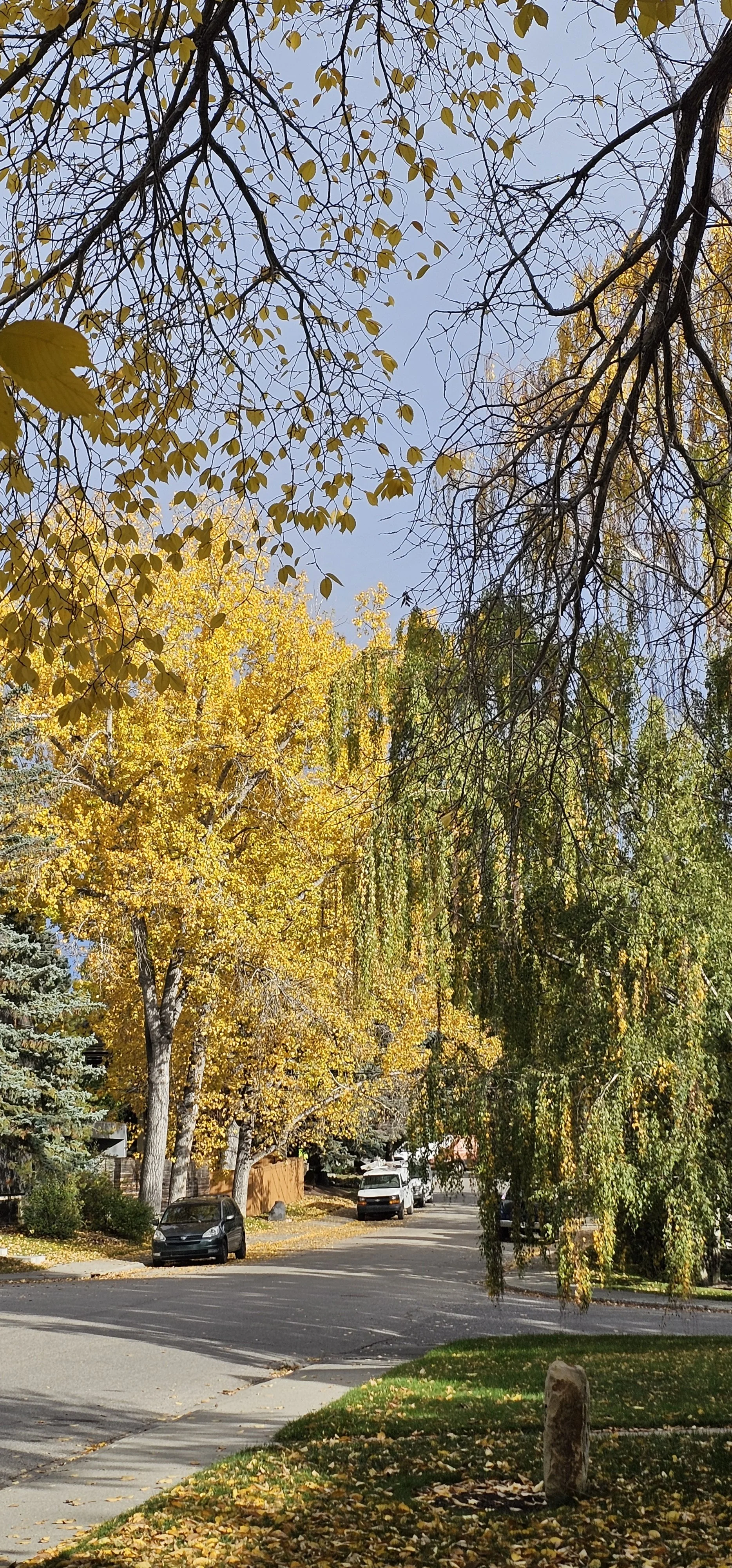
Image credit to the McGill Journal of Sustainable Development Law
Faites défiler vers le bas pour voir la version française.
On June 9, 2026, the municipal council of Terrasse-Vaudreuil, Quebec, unanimously adopted Resolution No. 2026-06-111. [1] The resolution reproduced the three founding articles of the Universal Declaration of Tree Rights (UDTR) and recognized four operational rights in the municipal context: life, natural growth, integrity, and regeneration. [2] On August 21, the Municipality announced that it was dissociating itself from the Declaration, stating that a “new framework” limited local flexibility. [3] La Compagnie des Papillons Bleus, the institutional steward of the UDTR framework, administers the institutional recognition of local authorities and the International Register within this voluntary framework. [4] On September 11, it ended its institutional recognition of Terrasse-Vaudreuil, removed it from the International Register, and asked the municipal council to repeal the resolution. [5] La Compagnie publicly disputes the characterization of a newly imposed framework. The sequence requires three questions to be kept distinct: the municipal act, participation in an institutional framework, and the legal enforceability of the rights proclaimed.
Rights without legal personhood
The UDTR does not confer legal personhood on Trees and does not, by itself, grant them standing before courts. [6] Legal personhood, legal subjecthood, representation, enforceability, and justiciability remain distinct concepts. The June 9 resolution therefore created neither autonomous legal subjecthood nor a new judicial remedy. Neither a prerequisite nor the exclusive legal foundation of the UDTR, legal personhood remains one possible mechanism among others, available where applicable law permits it and the competent authority has the necessary powers.
That does not make the resolution legally irrelevant. A resolution may guide municipal administration and public policy. Quebec’s Municipal Powers Act grants municipalities powers including over parks and environmental matters, while the Act respecting land use planning and development situates municipal action within objectives relating to climate change, natural environments, and biodiversity.[7] When a municipality seeks to impose a general obligation on regulated persons, however, the policy direction must be translated into a bylaw or another legally appropriate instrument. The recognition of rights can therefore structure public action without necessarily relying on the mechanism of legal personhood. At the time of its adoption, the Terrasse-Vaudreuil case could thus be understood as a “governance laboratory”: the resolution provided a basis for progressively translating the principles into land-use planning, tree-removal bylaws, inventories, soil protection, responsible planting, or public participation. The issue was how to connect a declaration of principle with concrete municipal instruments.
Institutional withdrawal does not repeal the municipal act
The September 11 decision exposes an additional distinction. An organization external to the Municipality cannot repeal an act adopted by a municipal council: the continuation, amendment, or repeal of Resolution No. 2026-06-111 remains a matter for the council under applicable municipal law. Conversely, institutional recognition within the UDTR framework, registration in the International Register, and a local authority’s ability to present itself as officially participating in that framework are governed by the institutional framework administered by its steward. The two statuses may therefore change independently. [8]
On September 29, 2026, the Municipal Council of Terrasse-Vaudreuil itself repealed Resolution No. 2026-06-111, following the formal request addressed to it on September 11. This subsequent development confirms the distinction drawn in the article between the withdrawal of institutional recognition, which fell within the institutional framework administered by La Compagnie des Papillons Bleus, and the repeal of the municipal resolution, which remained within the authority of the Municipal Council. [9]
A precedent becomes a governance case study
Since June, the UDTR framework has been further formalized. Under the Official Framework updated on September 13, 2026, any new official municipal adoption now combines the Declaration with all Fifteen Commitments of Local and Regional Authorities, with implementation remaining progressive and adaptable to local powers and circumstances. [10] The Assembly of the Tree remains advisory, without judicial, regulatory, administrative, or decision-making authority. [11] The proposed International Convention on Tree Rights has not been adopted, is not open for signature or ratification, and currently creates no treaty obligation. [12]
Terrasse-Vaudreuil is therefore no longer an example of continuous institutional implementation. It has become a more revealing case: the end of an institutional recognition does not, by itself, repeal the municipal act. For sustainable development law, the lesson is one of layered normativity. Principle, local political action, possible regulation, institutional governance, and judicial enforceability are not interchangeable. Identifying who has authority to adopt, interpret, implement, or withdraw recognition is itself part of legal effectiveness.
Disclosure: the author is the author and initiator of the UDTR, founder of the Assembly of the Tree, and president of La Compagnie des Papillons Bleus, the organization that issued the September 11, 2026 institutional decision. This role is expressly disclosed because it directly concerns the events analyzed.
Ricardo Rey is the founder and author of the Universal Declaration of Tree Rights and the founder of the Assembly of the Tree. He is president of the “Compagnie des Papillons Bleus,” the organization that originated the Universal Declaration on the Rights of Trees and the International Convention on Tree Rights project.
[1] Municipality of Terrasse-Vaudreuil, “Municipal Commitment to Canopy Protection and Recognition of The Fundamental Rights of the Tree” (9 June 2026), online: <www.declarationuniverselledesdroitsdelarbre.org/wp-content/uploads/2026/07/resolution-2026-06-111-terrasse-vaudreuil-unofficial-english-translation.pdf>.
[2] Ricardo Rey, “The Three Founding Articles of the Universal Declaration of Tree Rights” (18 November 2018), online: <www.declarationuniverselledesdroitsdelarbre.org/wp-content/uploads/2026/07/three-founding-articles-universal-declaration-tree-rights.pdf>.
[3] The Municipality of Terrasse-Vaudreuil, News Release, “La Municipalité de Terrasse-Vaudreuil réaffirme son engagement envers la nature” (21 August 2026), online: <www.terrasse-vaudreuil.ca/wp-content/uploads/2026/08/communique-engagement-envers-la-nature.pdf>.
[4] Universal Declaration of Tree Rights, “Official Framework – Origins, governance, representation, uses and authorisations” (13 September 2026), online: <www.declarationuniverselledesdroitsdelarbre.org/cadre-officiel-de-la-declaration-universelle-des-droits-de-larbre/#en>.
[5] Universal Declaration of Tree Rights, “Terrasse-Vaudreuil: cessation definitive de reconnaissance institutionnelle et retrait du Registre international” (12 September 2026), online: <www.declarationuniverselledesdroitsdelarbre.org/terrasse-vaudreuil-retrait-registre-international-udtr/#english-version>.
[6] Universal Declaration of Tree Rights, “Au-delà de la personnalité juridique : pourquoi la Déclaration universelle des droits de l’Arbre propose un autre modèle” (13 August 2026), online: <www.declarationuniverselledesdroitsdelarbre.org/au-dela-personnalite-juridique-droits-arbre/>; Universal Declaration of Tree Rights, “Christopher D. Stone and the Universal Declaration of Tree Rights” (25 July 2026), online: <www.declarationuniverselledesdroitsdelarbre.org/christopher-stone-universal-declaration-tree-rights/>.
[7] Municipal Powers Act, SQ 2005, c 6; Act Respecting Land Use Planning and Development, SQ 2023, c 12.
[8] Universal Declaration of Tree Rights, supra note 4.
[9] Municipality of Terrasse-Vaudreuil, Resolution No. 2026-09-156, adopted September 29, 2026.
[10] Ibid; Universal Declaration of Tree Rights, “The Fifteen Commitments of Local and Regional Authorities” (2 September 2026), online: <www.declarationuniverselledesdroitsdelarbre.org/wp-content/uploads/2026/07/fifteen-commitments-local-regional-authorities-udtr.pdf>.
[11] Universal Declaration of Tree Rights, “Assembly of the Tree” (11 July 2026), online: <www.declarationuniverselledesdroitsdelarbre.org/assembly-of-the-tree/>.
[12] Universal Declaration of Tree Rights, “Convention Internationale des Droits de L’Arbre” (18 August 2026), online: <www.declarationuniverselledesdroitsdelarbre.org/convention-internationale-droits-arbre/>.
Reconnaître les droits de l’Arbre sans personnalité juridique : Terrasse-Vaudreuil, de l’adoption municipale à la cessation de reconnaissance institutionnelle
Ricardo Rey
Une municipalité peut-elle reconnaître des droits aux Arbres sans leur attribuer la personnalité juridique ? À partir de la résolution adoptée à l’unanimité par Terrasse-Vaudreuil, au Québec, Ricardo Rey analyse un modèle émergent de mise en œuvre locale fondé sur les compétences municipales, la participation citoyenne et le développement progressif d’un cadre juridique et institutionnel consacré aux droits de l’Arbre.
Scroll up for English version.
Le 9 juin 2026, le conseil municipal de Terrasse-Vaudreuil, au Québec, a adopté à l’unanimité la résolution no 2026-06-111. Le texte reprenait les trois articles fondateurs de la Déclaration universelle des droits de l’Arbre (DUDA) et reconnaissait, dans le contexte municipal, quatre droits opérationnels : la vie, la croissance naturelle, l’intégrité et la régénération. Le 21 août, la Municipalité a annoncé sa dissociation de la Déclaration, affirmant qu’un « nouveau cadre » limitait la flexibilité locale. La Compagnie des Papillons Bleus, garante du cadre institutionnel de la DUDA, administre dans ce dispositif volontaire la reconnaissance institutionnelle des collectivités et le Registre international. Le 11 septembre, elle a mis fin à la reconnaissance institutionnelle de Terrasse-Vaudreuil, l’a retirée du Registre international et a demandé au conseil municipal d’abroger la résolution. La Compagnie conteste publiquement la qualification de « nouveau cadre imposé ». Cette séquence impose de distinguer trois plans : l’acte municipal, l’appartenance à un cadre institutionnel et l’opposabilité juridique des droits proclamés.
Des droits sans personnalité juridique
La DUDA ne confère pas la personnalité juridique aux Arbres et ne leur attribue pas, par elle-même, qualité pour agir en justice. Personnalité juridique, qualité de sujet de droit, représentation, opposabilité et justiciabilité demeurent des notions distinctes. La résolution du 9 juin ne créait donc ni sujet de droit autonome ni recours juridictionnel nouveau. Ni préalable ni fondement exclusif de la DUDA, la personnalité juridique reste un mécanisme possible lorsque le droit applicable le permet et que l’autorité compétente en a le pouvoir.
Cela ne la rend pas juridiquement indifférente. Une résolution peut orienter l’administration et guider des politiques publiques. Au Québec, la Loi sur les compétences municipales reconnaît notamment des compétences en matière de parcs et d’environnement ; la Loi sur l’aménagement et l’urbanisme inscrit aussi l’action municipale dans des objectifs relatifs aux changements climatiques, aux milieux naturels et à la biodiversité. Lorsque la municipalité veut toutefois imposer une obligation générale aux administrés, l’orientation politique doit être traduite dans un règlement ou un autre instrument juridiquement approprié. La reconnaissance de droits peut donc structurer l’action publique sans passer nécessairement par le mécanisme de la personnalité juridique. Lors de son adoption, le cas de Terrasse-Vaudreuil pouvait ainsi être analysé comme un « laboratoire de gouvernance » : la résolution offrait un appui pour traduire progressivement les principes dans l’urbanisme, les règlements d’abattage, les inventaires, la protection des sols, la plantation responsable ou la participation citoyenne. L’enjeu était d’articuler déclaration de principe et instruments municipaux concrets.
Le retrait institutionnel n’abroge pas l’acte municipal
La décision du 11 septembre fait apparaître une distinction supplémentaire. Une association extérieure à la Municipalité ne peut abroger un acte adopté par un conseil municipal : le maintien, la modification ou l’abrogation de la résolution no 2026-06-111 relèvent du conseil et du droit municipal applicable. Inversement, la reconnaissance d’une collectivité au sein du dispositif DUDA, son inscription au Registre international et sa capacité à se présenter comme collectivité officiellement participante à ce dispositif relèvent du cadre institutionnel administré par l’organisation porteuse. Ces deux situations peuvent donc évoluer séparément.
Le 29 septembre 2026, le conseil municipal de Terrasse-Vaudreuil a lui-même abrogé la résolution no 2026-06-111, à la suite de la demande formelle qui lui avait été adressée le 11 septembre. Cette évolution ultérieure confirme la distinction exposée dans l’article entre le retrait de la reconnaissance institutionnelle, qui relevait du cadre institutionnel administré par La Compagnie des Papillons Bleus, et l’abrogation de la résolution municipale, qui demeurait de la compétence du conseil municipal.
Le précédent est devenu un cas de gouvernance
Depuis juin, le cadre de la DUDA a été davantage formalisé. Selon le Cadre officiel mis à jour le 13 septembre 2026, toute nouvelle adoption officielle associe désormais la Déclaration et l’intégralité des Quinze Engagements des collectivités locales et régionales, avec une mise en œuvre progressive et adaptée aux compétences et aux réalités du territoire. L’Assemblée de l’Arbre demeure une instance consultative, sans pouvoir juridictionnel, réglementaire, administratif ou décisionnel. Le projet de Convention internationale des droits de l’Arbre n’est ni adopté, ni ouvert à la signature ou à la ratification et ne crée actuellement aucune obligation conventionnelle.
Terrasse-Vaudreuil n’est donc plus un exemple de mise en œuvre institutionnelle continue. Le cas est devenu plus instructif : la fin d’une reconnaissance institutionnelle n’emporte pas, à elle seule, abrogation de l’acte municipal. Pour le droit du développement durable, l’enseignement est celui d’une normativité par degrés : principe, acte politique local, règlement éventuel, gouvernance institutionnelle et justiciabilité ne se confondent pas. L’identification de l’autorité compétente pour adopter, interpréter, mettre en œuvre ou retirer une reconnaissance fait elle-même partie de l’effectivité du droit.
Déclaration d’intérêts : l’auteur est l’auteur et l’initiateur de la DUDA, fondateur de l’Assemblée de l’Arbre et président de La Compagnie des Papillons Bleus, organisation ayant pris la décision institutionnelle du 11 septembre 2026. Cette position est expressément signalée parce qu’elle se rapporte directement aux événements analysés.
Ricardo Rey est le fondateur et l’auteur de la Déclaration universelle des droits de l’Arbre ainsi que le fondateur de l’Assemblée de l’Arbre. Il est président de La Compagnie des Papillons Bleus, organisation à l’origine de la Déclaration universelle des droits de l’Arbre et du projet de Convention internationale des droits de l’Arbre.