

La Rose v Canada and the Possible Recognition of Environmental Rights under the Living Tree Constitution
Émile Dufresne-Piché
As climate-related and sustainability targets are increasingly missed at both the provincial and federal levels, La Rose v Canada establishes a pathway toward the constitutionalization of climate-related rights. Overcoming the challenge of justiciability for climate-based legal actions, the protection of the environment now appears closer than ever.
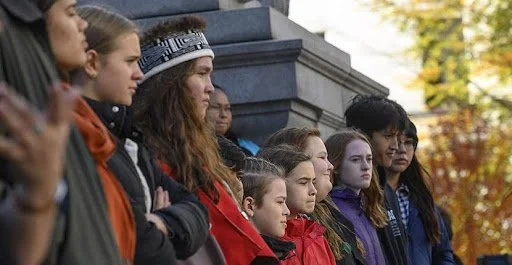
Image credit to Pacific Center for Environmental Law and Litigation
Situation of the Law in Canada
Climate change is a pressing issue in Canada. Amidst the consequences of recurring forest fires, random floods, sudden freezes and loss of biodiversity, legal solutions have been brought forth to contribute to the climate effort. [1[ Some of these initiatives have taken the form of rights-based reforms through litigation. [2]
Unlike countries such as Bolivia, Norway, Costa Rica, and France, which have explicitly recognized environmental rights in their respective constitutions, [3] Canada’s constitutional documents do not. However, in recent years, numerous environmental lawsuits have been initiated to bring forth the concept of climate rights. [4] These claims seek to recognize environmental rights through various means, including Charter claims, unwritten constitutional principles claims, and the use of section 35 of the 1982 Constitution Act.
The most recent and promising cases focus on section 7 of the Charter, which is seen as fertile ground for such recognition. [5] Nevertheless, none of these judgments have succeeded, primarily due to evidentiary or procedural issues, especially the lack of justiciability. [6] However, the recent development in case law brought forth in La Rose v Canada challenges the status quo and opens the door to future constitutionalization of climate rights.
The La Rose Case
State of the Decision
In 2020, fifteen youth across Canada filed a lawsuit against the federal government, asserting that its contribution to greenhouse gas emissions damaged their physical, mental, and social well-being. They argued that legislation and approvals for greenhouse gas (GHG)-emitting projects breached the government's obligations to reduce GHG emissions under the Paris Agreement, which is incorporated into Canadian legislation through section 7 of the Canadian Net-Zero Emissions Accountability Act. [7] The federal court initially dismissed the case for lack of justiciability, deeming the issue too political for judicial review. [8]
The decision was appealed, and in 2023, the Federal Court of Appeal unanimously reversed the justiciability claim. However, even in light of the justiciability of Charter-based claims, it was found that they were overly broad in failing to target specific legislation. [9]
Insights from La Rose
Though the environmental rights claim ultimately failed, the court provided key insights into section 7 claims. La Rose serves as a blueprint for future cases, demonstrating that challenging climate legislation with section 7 claims can be justiciable. [10] The court also clarified that climate reduction goals are not automatically positive rights claims. [11] Finally, the court reiterated that causality in climate change only required contribution, not sole causation. [12]
These findings have had an impact on subsequent litigation by lowering entry barriers for similar challenges. As such, even though the judgment in La Rose does not guarantee climate rights, it offers crucial guidance for pursuing a successful climate-related lawsuit.
Subsequent Case Influence: La Rose and International Cases
The most promising subsequent case building on La Rose is Mathur. This case has a similar structure to La Rose. It makes its constitutional claim by attacking ceilings on carbon emissions. The Mathur case has built on La Rose: by relying on the ruling on justiciability, the judgment reversed the dismissal on appeal.
Additionally, in Mathur, the Ontario Court of Appeal recognized that climate change clearly “increase[d] the risk of death and threaten[ed] personal security”. [13] The court also explicitly stated that once governments have undertaken climate actions, challenges to adopted climate legislation do not constitute a positive rights-based claim. [14] Finally, this judgment also stated that, if the claim was to be successful, the question of relief would fall within the court’s jurisdiction. [15] Ultimately, the case ended in a standstill, requiring a second first-instance judgement because of an error in law. [16]
Considering that environmental rights are becoming increasingly widespread, [17] that Canadian courts now consider some facets of the environmental issue to be judicial in nature, and that other countries with protection of the right to life have interpreted it to include environmental components, [18] some form of recognition of such a right in Canada would not be surprising.
Impact of Right Environmental Right Recognition
The recognition of constitutional environmental rights (CER) would most likely have a positive impact on Canadian climate policy. Indeed, empirical studies have shown that there is a positive link between substantive CER provisions and environmental outcomes. [19] The incorporation of CER could be reconciled with the Canadian constitutional architecture by adopting a declaratory stance, letting the legislature draw out the necessary solutions once there is an infringement. [20] This approach would respect the separation of powers while guaranteeing citizens’ right to life. [21] In sum, the La Rose judgement signals an opportunity worth pursuing for such results to make their way into Canadian law.
Émile Dufresne-Piché is a first-year student at McGill University, enrolled in the Faculty of Law, pursuing a BCL/JD degree. Prior to studying law, he completed a DEC in natural sciences. His academic interests focus on litigation strategies addressing climate change-related issues, particularly at the intersection of constitutional law and climate policy. He extends his gratitude to Rita Slaoui for her assistance and patience during the editorial process, and also wishes to acknowledge the support of the MLSDJ editorial team and the opportunity to contribute to the journal.
[1] Agnes V Rydberg, “Climate Change Litigation: General Perspectives and Emerging Trends” (2024) 26:4 Int Community L Rev 347 at p 348.
[2] Ibid.
[3]Constitución Política del Estado [Constitution of Bolivia], (2009), online: <https://www.constituteproject.org/constitution/Bolivia_2009>; Kongeriket Norges Grunnlov [The Constitution of the Kingdom of Norway], (2024) online: <https://www.refworld.org/legal/legislation/natlegbod/1814/en/39743>; Texte intégral de la Constitution du 4 octobre 1958, (2024), online: <https://www.conseil-constitutionnel.fr/le-bloc-de-constitutionnalite/texte-integral-de-la-constitution-du-4-octobre-1958-en-vigueur>; Constitución Política de la República de Costa Rica de 1949 [Political constitution of Republic of Costa Rica Republic], (2011), online : <https://www.constituteproject.org/constitution/Costa_Rica_2011>.
[4] Friends of the Earth v Canada (Governor in Council), 2008 FC 1183 [Friends of the Earth]; Turp v. Canada (Justice), 2012 FC 893 [Turp]; Lho'Imggin v Canada, 2025 FC 1586 [Lho'Imggin]; La Rose v Canada, 2023 FCA 241 [La Rose #2]; Mathur v Ontario, 2024 ONCA 762 [Mathur]; Dykstra v Saskatchewan Power Corporation, 2025 SKKB.
[5] Nickie Vlavianos, “The Intersection of Human Rights Law and Environmental Law” (2012) at p 7, online: <https://cirl.ca/sites/default/files/teams/1/2012%20Symposium/ENG_The%20Intersection%20of%20Human%20Rights%20Law%20and%20Environmental%20Law_Vlavianos.pdf>.
[6] Nathalie J Chalifour et al, "Coming of Age in a Warming World: The Charter's Section 15(1) Equality Guarantee and Youth-Led Climate Litigation" (2021) 17 JL & Equal 1 at p 25; Larissa Parker, "Let Our Living Tree Grow: Beyond Non-Justiciability for the Adjudication of Wicked Problems" (2023) 81:1 U Toronto Fac L Rev 54. at p 56; Friends of the Earth, supra note 4; Turp, supra note 4.
[7] La Rose #2, supra note 4.
[8] La Rose v Canada, 2020 FC 1008 [La Rose] at para 26.
[9] La Rose #2, supra note 4 at para 22.
[10] Ibid.
[11] Ibid at paras 101-109.
[12] Ibid at para 110.
[13] Mathur v Ontario, 2024 ONCA 762 at para 44 [Mathur].
[14] Ibid at paras 46-53.
[15] Ibid at para 74.
[16] Ibid at para 75.
[17] Sam Bookman, “Demystifying Environmental Constitutionalism” (2024) Envt L Rev 54:1 at p 4.
[18] Urgenda Foundation v State of the Netherlands, 19/00135 SC of the Netherlands, online: <https://cdn.climatepolicyradar.org/navigator/NLD/2015/urgenda-foundation-v-state-of-the-netherlands_fcb4bfb035f824ccd4567dc2a9974d92.pdf>; Verein KlimaSeniorinnen Schweiz and Others v Switzerland, Application no. 53600/20 ECHR; MK Ranjitsinh et al. v Union of India et al., 2024 INSC 280.
[19] Chris Jeffords, “On the Relationship between Constitutional Environmental Human Rights and Sustainable Development Outcomes” (2021) Transdisciplinary J of the Int Society Envtl Econ 186:1 at p 3.
[20] Kent Roach, “Judicial Remedies for Climate Change” (2021) 17:1 J L & Equity 106 at pp 122-124.
[21] Ibid.